Customers reject temperature-sensitive deliveries
Reports give suppliers and customers a shared basis for acceptance, rejection, or corrective action.
Solution / Food cold chain temperature monitoring
Logmore gives food logistics teams QR temperature logger data and cloud reports for chilled, frozen, and ambient shipments, helping teams review claims, waste, and lane performance.
When this matters
Reports give suppliers and customers a shared basis for acceptance, rejection, or corrective action.
Lane-level evidence helps teams identify recurring cold chain problems instead of treating every issue as isolated.
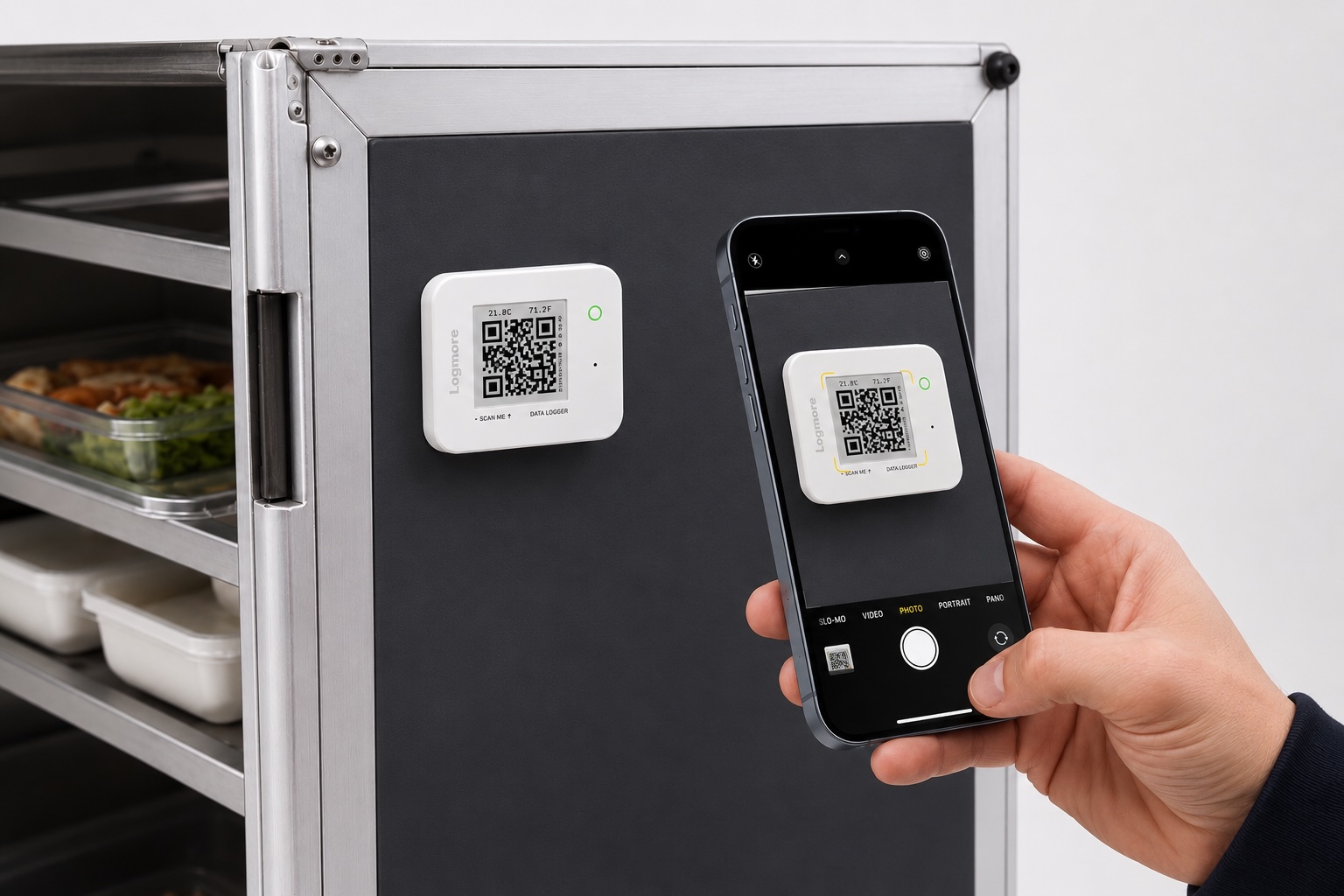
QR upload avoids special receiving hardware and keeps the monitoring step practical for busy food distribution operations.
How Logmore helps
Logmore connects physical shipment monitoring with reviewable cloud records so QA, logistics, and partners can work from the same evidence.
Scan at loading, cross-dock, delivery, or receiving to collect temperature evidence where decisions happen.
Use temperature graphs and exports to discuss customer claims, carrier performance, and supplier accountability.
Food distribution routes support device recovery when teams can collect, clean, and redeploy reusable QR loggers.
Recommended setup
The right setup depends on product risk, return logistics, sensor needs, and the evidence your team needs after the shipment arrives.
Use reusable QR loggers on catering, retail, or food service routes where devices return regularly.
Use single-use workflows when frozen or chilled goods move through customers, carriers, or markets where device recovery is unreliable.
Track route, carrier, customer, or location patterns so teams can reduce repeated rejections and avoidable spoilage.
Food operations
Food cold-chain programs need practical evidence at busy handoff points, not a fragile readout process.
Use lane-level reports to identify repeat dwell-time, loading, cross-dock, or delivery issues that drive spoilage.
Share temperature reports with customers, carriers, suppliers, and quality teams when acceptance is disputed.
Scan at loading, route return, customer delivery, or receiving so evidence is captured where decisions happen.
Scenarios and evidence
Document temperature history across loading, linehaul, cross-dock, and receiving for products with strict acceptance expectations.
Use practical scan points on high-volume routes where speed matters and receivers cannot handle special readout hardware.
Share temperature reports with customers, carriers, suppliers, or internal quality teams when a delivery is disputed.
Workflow
Keep the monitoring process clear enough for warehouses, receivers, QA teams, and partners to repeat.
Set logger type, measurement interval, thresholds, product profile, and reporting rules before dispatch.
The QR data logger records condition history while the shipment moves through carriers, handoffs, dwell time, and receiving.
A normal phone scan uploads data to Logmore Cloud without USB readers, installed receiver apps, or local report files.
Quality and logistics teams review reports, alerts, audit trails, certificates, comments, and exports from one cloud record.
Common objections
Monitoring provides the evidence. Waste reduction comes from using that evidence to improve routes, partners, handling, packaging, and acceptance decisions.
Logmore supports temperature evidence and documentation; the customer's food safety system defines procedures, decisions, and corrective actions.
Product context
Industry overview for chilled, frozen, and ambient food distribution.
Open pageBackground reading for food cold chain quality and distribution risk.
Open pageLogger models for temperature, humidity, shock, light, and dry ice lanes.
Open pageCloud reports, dashboards, alerts, audit trails, certificates, comments, and exports.
Open pageConnect mission data to quality, logistics, WMS, TMS, and control-tower systems.
Open pageFAQ
It is the recording and review of temperature conditions for chilled, frozen, or ambient food shipments during distribution.
Logmore can help teams identify temperature problems, review claims, and improve lanes. Waste reduction depends on how teams use the evidence operationally.
No. Receivers can upload Logmore QR logger data with a normal smartphone camera.
Yes. The appropriate logger model and threshold setup depend on shipment range, duration, and operational workflow.
Yes. The same QR-to-cloud workflow can be configured with different logger models, thresholds, and reports by product category.
Yes. Reports can help supplier, carrier, customer, and internal teams review whether a quality issue is isolated or recurring.
Related pages
Talk with Logmore about chilled, frozen, fresh, prepared, and ambient lanes where QR reports can reduce disputes and manual work.