Shipments use dry ice packaging
Deep-cold lanes need probe placement and reporting that reflect the product or packaging environment.
Solution / Dry ice temperature monitoring
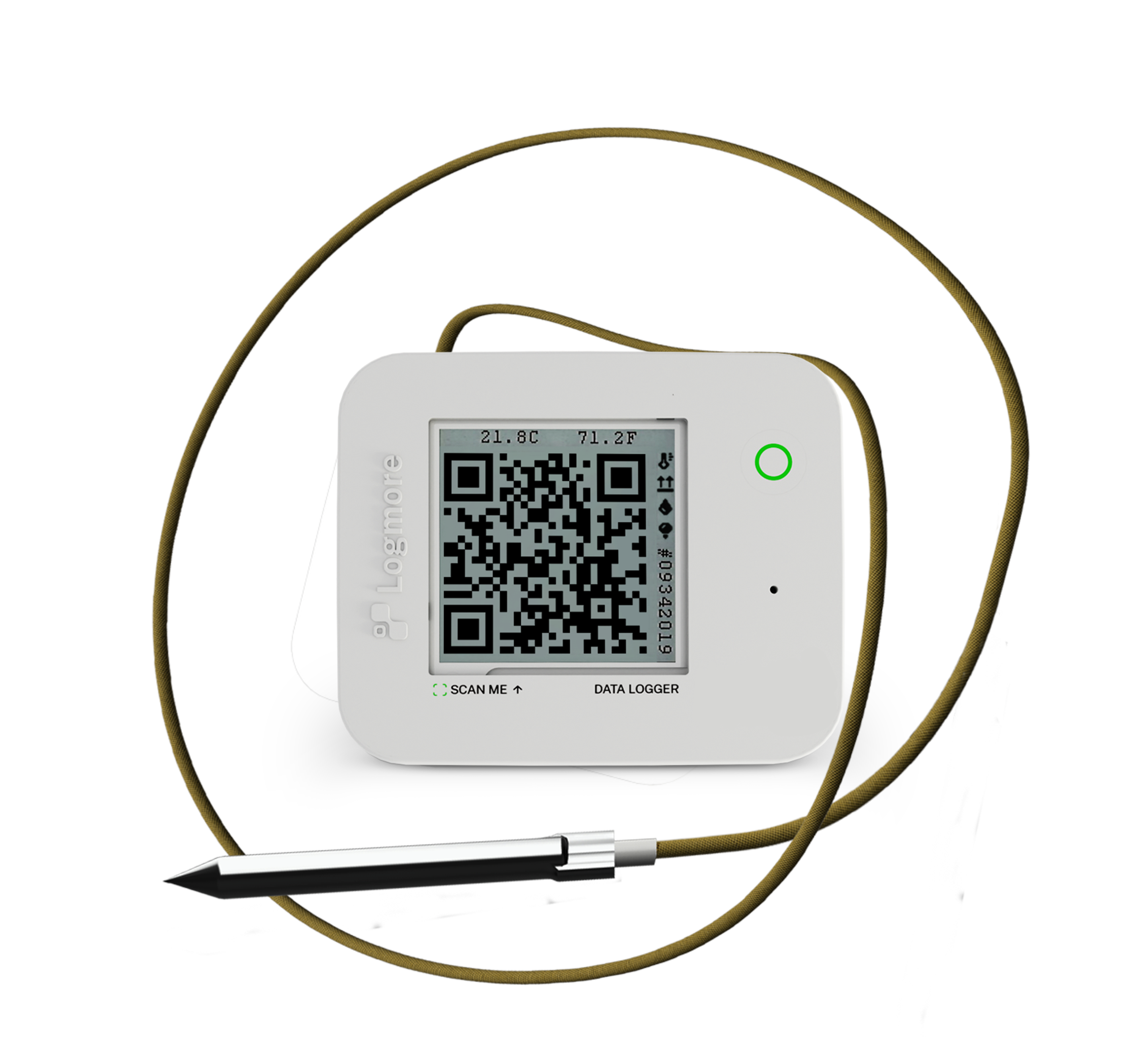
Logmore probe logger workflows collect deep-cold shipment data by QR scan and turn it into cloud reports for dry ice, biologics, samples, and pharma QA review.
When this matters
Deep-cold lanes need probe placement and reporting that reflect the product or packaging environment.
Reports help teams understand when temperature conditions changed and how long the shipment was outside limits.
QR scan upload helps collect evidence without asking receivers to install software or plug in devices.
How Logmore helps
Logmore connects physical shipment monitoring with reviewable cloud records so QA, logistics, and partners can work from the same evidence.
Logger 40, 50, and 60 support external probe monitoring for dry ice and deep-cold conditions.
Logmore Cloud turns probe measurements into graphs, reports, alerts, and exports for shipment review.
Depending on model, teams can add humidity, shock, ambient light, and scan context to deep-cold evidence.
Recommended setup
The right setup depends on product risk, return logistics, sensor needs, and the evidence your team needs after the shipment arrives.
Use a probe model such as Logger 40, 50, or 60 when the measurement point must reflect deep-cold package or product conditions.
Define probe placement through packaging design, risk assessment, product requirements, and the customer's approved process.
Configure thresholds, reports, exports, and comments so QA can interpret warming events, arrival condition, and partner evidence.
Deep-cold setup
Dry ice monitoring depends on where the probe measures and how QA interprets warming events.
Document whether the probe reflects product space, package space, or another approved measurement point.
Review warming duration, maximum temperature, route stage, scan timing, and packaging context before deciding product impact.
Show probe path, logger location, dry ice layer, product payload, and receiving scan point in the customer's approved packing instructions.
Scenarios and evidence
Use probe measurements to document whether deep-cold shipments stayed within the required conditions.
Monitor high-value or limited materials where excursion review needs fast, shareable evidence.
Use reports as operational evidence alongside packaging qualification, lane qualification, and approved placement procedures.
Workflow
Keep the monitoring process clear enough for warehouses, receivers, QA teams, and partners to repeat.
Set logger type, measurement interval, thresholds, product profile, and reporting rules before dispatch.
The QR data logger records condition history while the shipment moves through carriers, handoffs, dwell time, and receiving.
A normal phone scan uploads data to Logmore Cloud without USB readers, installed receiver apps, or local report files.
Quality and logistics teams review reports, alerts, audit trails, certificates, comments, and exports from one cloud record.
Common objections
No. Placement should follow the customer's packaging design, risk assessment, product needs, and validation or qualification work.
Not always. Use live tracking when intervention is possible; use QR probe loggers when evidence at receiving or review is the main need.
Product context
Logger models for temperature, humidity, shock, light, and dry ice lanes.
Open pageCloud reports, dashboards, alerts, audit trails, certificates, comments, and exports.
Open pageConnect mission data to quality, logistics, WMS, TMS, and control-tower systems.
Open pageExample of Logmore integration in a dry ice pharmaceutical shipment context.
Open pageIndustry overview for regulated pharma, life science, vaccine, sample, and clinical trial shipments.
Open pageFAQ
Dry ice shipments need an external probe logger when the package or product space must be measured at deep-cold temperatures. Logmore Logger 40, 50, and 60 are built for external probe use cases.
Yes. External-probe Logmore models support deep-cold monitoring use cases, including dry ice shipments.
Probe placement depends on packaging design, product requirements, and validation. The placement should match the customer's approved process.
Yes. Logmore Cloud reports and exports can be shared for QA, carrier, customer, or partner review.
Yes. Reports can help packaging, QA, and logistics teams discuss warming patterns, dwell times, and lane performance.
Depending on the model, teams can combine probe data with humidity, shock, light, and scan context.
Related pages
Review probe models, placement assumptions, thresholds, reports, and evidence workflows for dry ice shipments.