The product rides in deep-cold packaging
Dry ice lanes need external probe placement and clear handling instructions for reliable condition evidence.
Solution / Dry ice data loggers
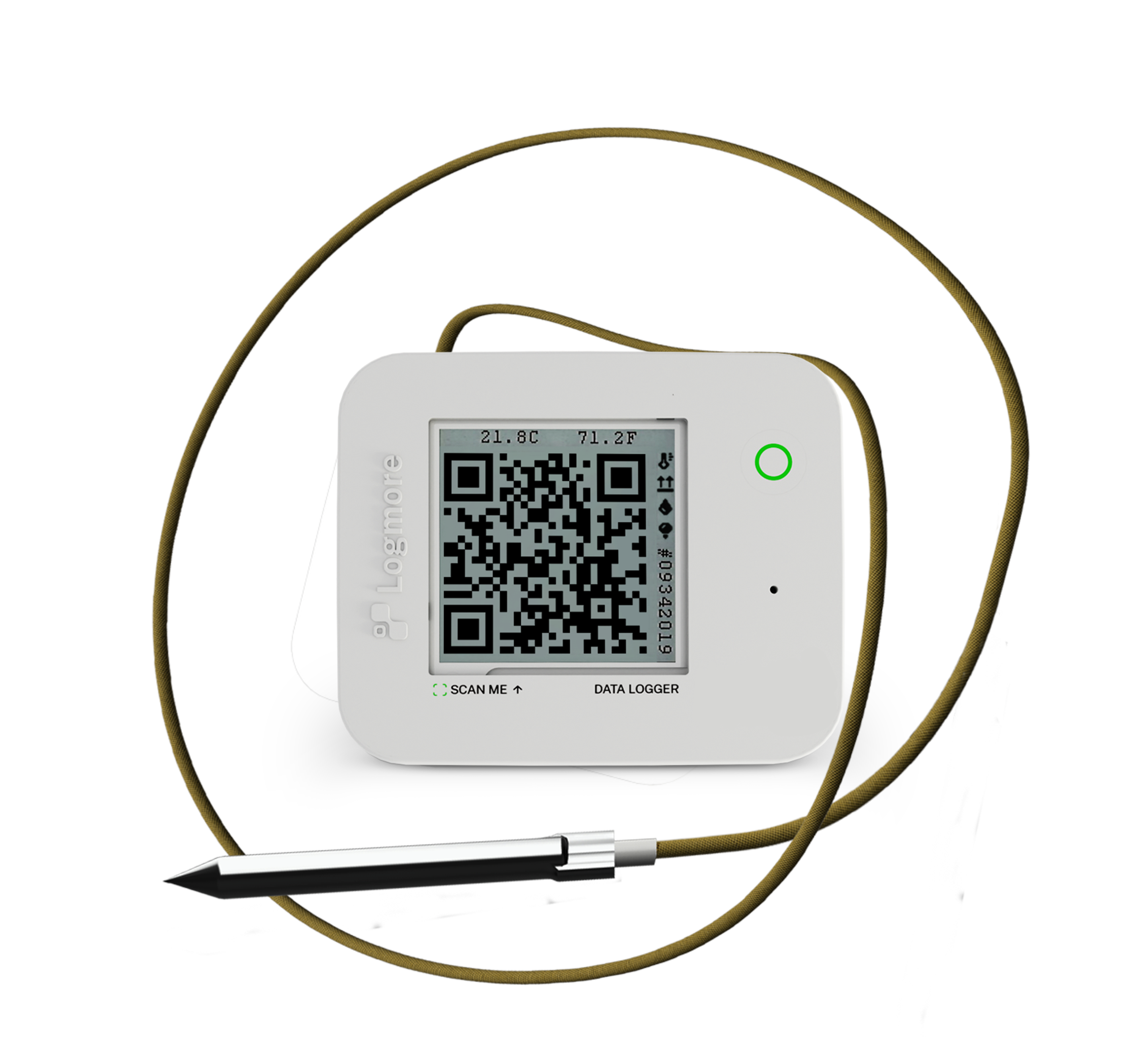
Logmore probe logger workflows replace USB readout on dry ice lanes with QR upload and cloud reports. Receiving stays simple, while QA gets deep-cold shipment evidence in Cloud.
When this matters
Dry ice lanes need external probe placement and clear handling instructions for reliable condition evidence.
QR upload keeps the readout process practical even when shipments arrive at many external sites.
Temperature history, scan events, comments, certificates, and exports help teams review shipment condition.
How Logmore helps
Logmore connects physical shipment monitoring with reviewable cloud records so QA, logistics, and partners can work from the same evidence.
External-probe workflows support deep-cold shipment monitoring where internal package temperature matters.
A receiving scan uploads the mission so QA can review reports, alerts, certificates, and comments in Logmore Cloud.
Dry ice data logger evidence can live alongside pharma, clinical, and cold chain monitoring programs.
Recommended setup
The right setup depends on product risk, return logistics, sensor needs, and the evidence your team needs after the shipment arrives.
Document where the probe sits in the packaging and how receiving teams should handle it.
Configure temperature limits, mission duration, measurement intervals, and report fields around the product profile.
Make QR scanning part of unpacking or QA intake so dry ice evidence reaches the right team quickly.
Logger choice
This page focuses on selecting a dry ice logger workflow: sensor, probe, placement, upload, and report needs.
Use external-probe models when the measured point must reflect deep-cold package or product space.
Define probe route, logger location, dry ice exposure, and receiving instructions before shipments begin.
Configure thresholds, measurement interval, certificates, comments, and exports for QA interpretation.
Scenarios and evidence
Use probe logger evidence for deep-cold materials shipped to or from labs, hospitals, and research sites.
Support QA review with temperature history, scan events, certificates, comments, and controlled exports.
Standardize deep-cold evidence for customers without distributing USB reader hardware to each receiving point.
Workflow
Keep the monitoring process clear enough for warehouses, receivers, QA teams, and partners to repeat.
Set logger type, measurement interval, thresholds, product profile, and reporting rules before dispatch.
The QR data logger records condition history while the shipment moves through carriers, handoffs, dwell time, and receiving.
A normal phone scan uploads data to Logmore Cloud without USB readers, installed receiver apps, or local report files.
Quality and logistics teams review reports, alerts, audit trails, certificates, comments, and exports from one cloud record.
Common objections
Yes. Dry ice and deep-cold lanes need different sensors, probe placement, packaging instructions, and review criteria.
No. QR loggers record during shipment and upload when scanned, so evidence collection does not rely on continuous connectivity.
Product context
Logger models for temperature, humidity, shock, light, and dry ice lanes.
Open pageCloud reports, dashboards, alerts, audit trails, certificates, comments, and exports.
Open pageConnect mission data to quality, logistics, WMS, TMS, and control-tower systems.
Open pageIndustry overview for regulated pharma, life science, vaccine, sample, and clinical trial shipments.
Open pageExample of reducing manual QA work with automated temperature analysis.
Open pageExample of QR-based shipment status checks for pharmaceutical distribution.
Open pageFAQ
Dry ice shipments use probe-based temperature data logger workflows when the measured temperature must reflect the package or product space that matters.
Yes. Logmore QR logger workflows can upload recorded data through a phone scan instead of USB readout.
Only when live intervention during transit changes the outcome. Many lanes mainly need reliable evidence at receiving and QA review.
Yes. Logmore supports dry ice and deep-cold monitoring workflows for pharma, biotech, clinical, and sample shipments.
Document probe placement, thresholds, measurement interval, shipment identity, scan events, certificates, and QA review decisions.
This page focuses on data logger selection and readout workflow. The dry ice monitoring page covers the broader operational monitoring process.
Related pages
Review probe placement, thresholds, QR upload, certificates, reports, and QA review for deep-cold shipments.