Device recovery is unrealistic
One-way lanes need simple shipment evidence.
Solution / Disposable USB alternative
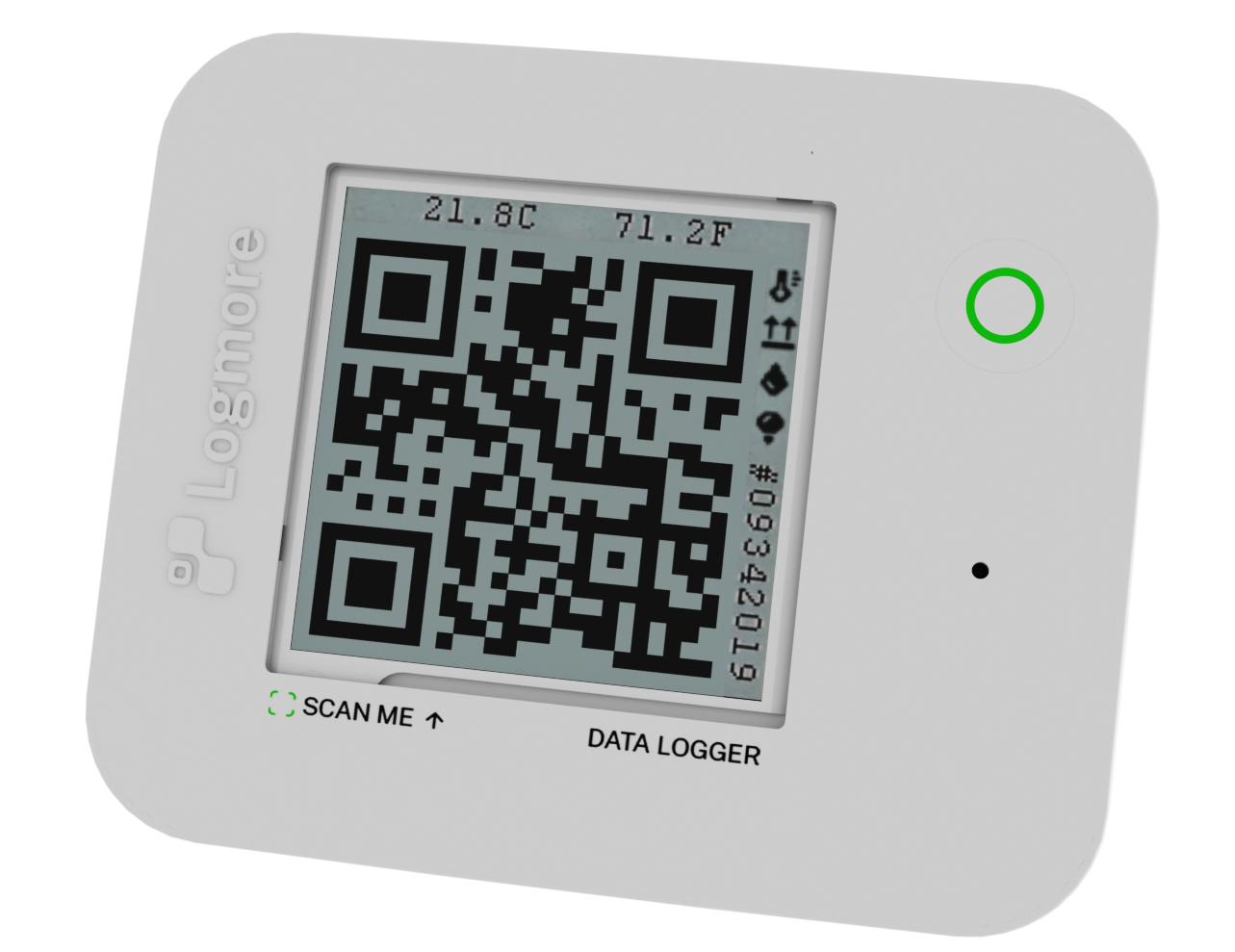
Logmore single-use QR loggers replace disposable USB loggers with scan-to-cloud reporting. Keep the one-way process, remove USB readout and local PDF handling.
When this matters
One-way lanes need simple shipment evidence.
QR upload replaces downloaded files and emails.
Phone scanning standardizes the receiving step.
How Logmore helps
Logmore connects physical shipment monitoring with reviewable cloud records so QA, logistics, and partners can work from the same evidence.
Logger 1 supports one-way shipments while replacing receiver-side USB readout with QR upload.
Reports, alerts, certificates, comments, and exports can be reviewed in Logmore Cloud after scan upload.
Use single-use where recovery fails and reusable or probe models where route control or temperature range requires them.
Recommended setup
The right setup depends on product risk, return logistics, sensor needs, and the evidence your team needs after the shipment arrives.
Use single-use QR loggers where device return is costly, unreliable, or operationally distracting.
Make scanning part of receiving, unpacking, handoff, or QA intake so reports arrive consistently.
Use Logmore Cloud as the record location instead of asking receivers to email local PDF files.
One-way lanes
Disposable USB alternatives should be evaluated by one-way lane fit, report return, and total operational cost.
Compare cost per report returned, not only device cost. Missing data and report chasing have a cost too.
Use single-use QR loggers when device return is impractical, slow, or more expensive than the monitoring value.
International pharma shipments, customer-direct food deliveries, clinical materials, and hard-to-recover partner lanes.
Scenarios and evidence
Use one-way QR loggers when recovering devices from wholesalers, hospitals, or partners is not practical.
External sites can upload shipment evidence by scan without keeping reader hardware on hand.
Customers or depots can provide temperature evidence without a USB readout station.
Workflow
Keep the monitoring process clear enough for warehouses, receivers, QA teams, and partners to repeat.
Set logger type, measurement interval, thresholds, product profile, and reporting rules before dispatch.
The QR data logger records condition history while the shipment moves through carriers, handoffs, dwell time, and receiving.
A normal phone scan uploads data to Logmore Cloud without USB readers, installed receiver apps, or local report files.
Quality and logistics teams review reports, alerts, audit trails, certificates, comments, and exports from one cloud record.
Common objections
No. Reusable loggers can be better on closed loops where device return works. Single-use fits lanes where recovery is impractical.
No. Include report delays, missing data, customer experience, QA effort, return logistics, and device loss when comparing workflows.
Product context
Replace USB readout with scan-to-cloud shipment reports.
Open pageLogger models for temperature, humidity, shock, light, and dry ice lanes.
Open pageCloud reports, dashboards, alerts, audit trails, certificates, comments, and exports.
Open pageConnect mission data to quality, logistics, WMS, TMS, and control-tower systems.
Open pageIndustry overview for regulated pharma, life science, vaccine, sample, and clinical trial shipments.
Open pageExample of reducing manual QA work with automated temperature analysis.
Open pageExample of QR-based shipment status checks for pharmaceutical distribution.
Open pageFAQ
A single-use QR logger that uploads to cloud reports by phone scan.
Yes. Logger 1 is built for hard-to-recover routes.
No. The receiver scans with a normal phone camera.
Yes, when configured for the route and QA requirements.
Use reusable models where device return is reliable.
Yes. Reports and exports are available from Logmore Cloud.
Related pages
Review one-way route volume, receiver setup, report handling, certificates, and total workflow cost.